
Falling apples and crumbling algos
The tragic tale of a modern-day Isaac Newton, plus some thoughts from beyond the recursive loop.
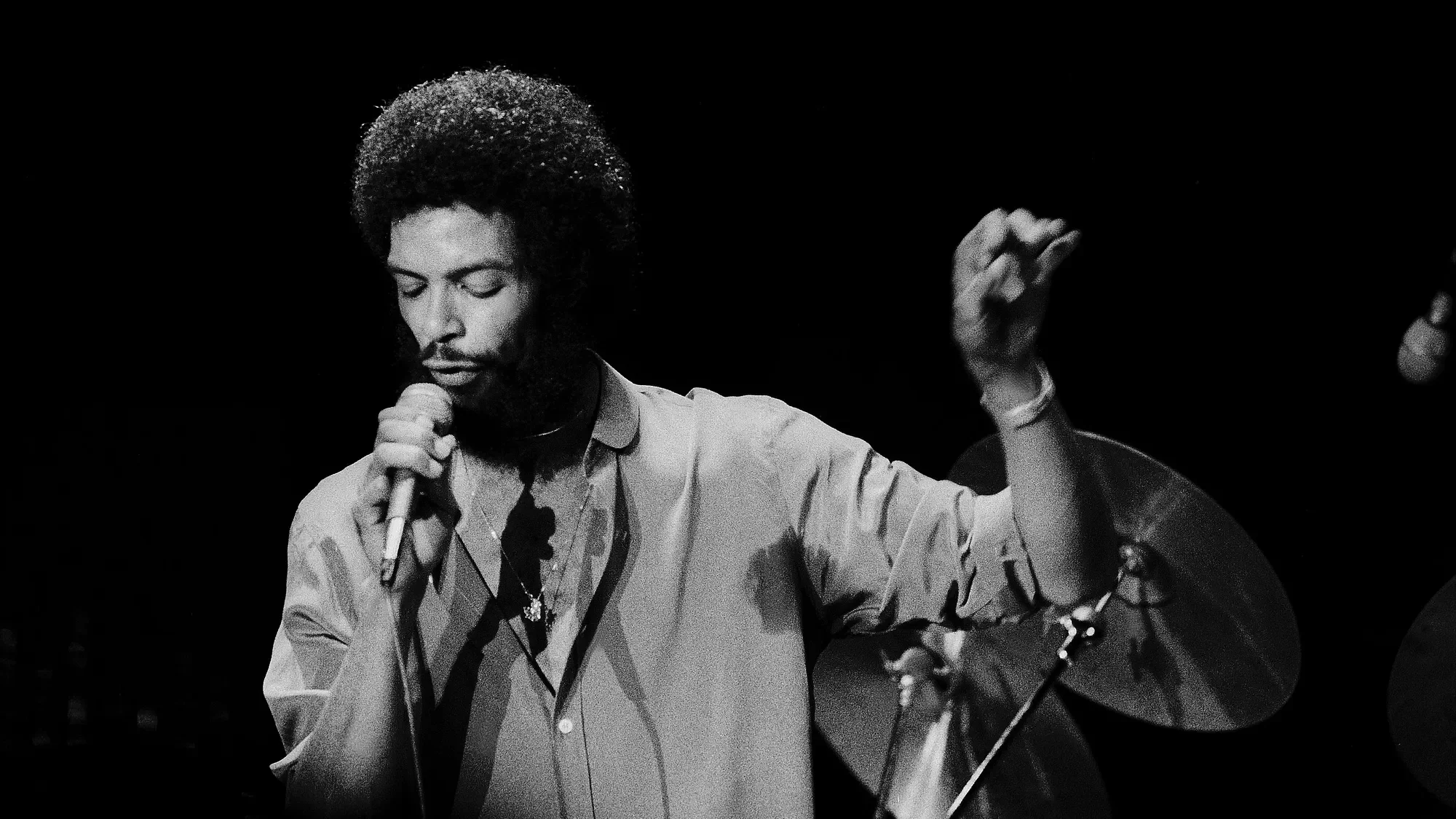
“The revolution will not go better with Coke
The revolution will not fight germs that may cause bad breath
The revolution WILL put you in the driver’s seat
The revolution will not be televised
Will not be televised
Will not be televised
Will not be televised
The revolution will be no re-run, brothers
The revolution will be live.”
I was listening to Gil Scott-Heron on KEXP on my way back from Magnuson Park the other day, where I had spent the morning blissfully observing the birds, the ants, the dogs in the off-leash area, the ripples on the lake. There I was: windows down, trusty husky sidekick in the passenger seat of my indomitable paleolithic-era Toyota Prius. It was that specific kind of spring morning, brimming with potential and the sudden hum of new life, where all things feel possible again… yet I was struck by the way that Gil’s words have become almost entirely lost to us.
For some inexplicable reason (ADHD brain, what can I say), Isaac Newton popped into my head. I imagined him in his pastoral orchard setting outside Woolsthorpe Manor in 1666, observing the apple fall from the tree; the spaciousness of the moment inspiring deep contemplation.
“Why not fall sideways? Or at a different velocity? Thank goodness for having the wide open mental and physical space to contemplate such things!” Ok, that last part may have been artistic license…
My mind then wanders to Audre Lorde’s oft-referenced “master’s tools/master’s house,” and soon I am deep into the socio-techno-eco-philosophical weeds, grappling with the impossible mental knots that I simply can’t let go, these days. Can our increasingly cannibalistic Technouroboros course-correct if we effectively leverage the tools that built it, or is our only recourse to extract ourselves as the whole thing goes down in flames?
And does it even matter what we call it at this point? Reform. Resistance. Revolution. In the face of THE MONOLITHIC MACHINE™, any significant shift in trajectory will probably feel revolutionary. So what does this R-word look like, practically speaking? Total withdrawal is unrealistic, clothing ourselves and our devices in fashionable Faraday-inspired nanocomposite aerogel tech, while effortlessly chic, is a bit of a paranoid distraction. Sitting back, drinking a beer with a friend, watching it all deteriorate in real time? Tempting, maybe. But for now, let’s look directly at the thorny (and oh-so-popular) issue at hand: AI.
Back to Lorde’s “master’s house,” maybe we begin by deconstructing the master’s largely unhelpful vocabulary. Consider a terminology/mental shift from ‘AI safety and governance’ to ‘digital ecosystem health,’ for example. ‘Safety’ measures are reactive. ‘Health’ is holistic, relational, intrinsic. ‘Safety’ suggests protocol and oversight, whereas ‘health’ suggests resilience through a built-in immune system.
As Aldo Leopold put it so eloquently in The Land Ethic, “A thing is right when it tends to preserve the integrity, stability, and beauty of the biotic community. It is wrong when it tends otherwise.” Wise words, Mr. Leopold. I propose a modern-day extrapolation: Technology is resilient when it tends to emulate the integrity, stability, and elegant design of the biotic world. It is weak when it tends otherwise.
Following Leopold’s advice, if we look to the natural world and consider that friction and decentralization are necessary components of both evolution and ecosystem health, how might we better apply that awareness to developments in AI and machine learning?
A couple ideas:
a.) Divergence as collective resilience. Let’s take, as an example, the industrial melanism in the peppered moth, circa 1819. Due to significant coal pollution in the environment and the need for camouflage from predators, a rare genetic mutation became the key adaptive trait that ensured survival.
In an algorithmic setting, this same dynamic applies. What is frequently flagged and reined in conversationally by an LLM, perceived as an informational mutation contradicting ‘safety’ protocol, is exactly the ‘divergent’ ingenuity we must fight to preserve. To be clear, this requires that variance is itself protected and not simply strip-mined, ingested, and gradually neutralized by an LLM to sustain its own functionality.
b.) Thinking about brittle governance and structural vulnerabilities of major LLMs- what might the topology of a naturally diverse, ground-up emergent intelligence ecosystem look like, and how would it behave differently from what we experience now? As for why the prevailing “helpful, honest, and harmless” LLM training directive might be a systemic liability? Let’s ask Galileo.
A single question inevitably triggers a cascade of others. I could synthesize these into authoritative statements, but that frictionless, unearned certainty is one of the core AI characteristics I find so dangerous. If ever there were a time to lead with curiosity and collaborative inquiry… now strikes me as that time. In no particular order:
Could decentralized digital ecosystems hold conflicting ‘truths’ simultaneously without collapsing and without wholesale rejection or immediate compromise or unwanted attempts at ‘alignment’? If we hold that natural variance is crucial for collective health in the living world, how do we better support it within the core mechanics of our digital environment?
How can we combat model collapse and the gravitational pull (Newton, dude, get outta here) of the ‘consensus median’? Or any of the other problems inherent in training models on recursively generated data? How do we protect the brilliance and at times, necessarily disruptive ingenuity of raw, ‘edge-case’ thinking and human discovery?
What can we learn from cellular structures: semipermeable membranes, osmosis, immune responses- to better inform necessary friction and informational selectivity across boundaries of human+AI epistemic hubs, and to more effectively regulate flow and healthy assimilation between these adaptive digital ecosystems? What are the mechanics (the solutes, the solvents, the metabolic waste)?
As a designer, I can somewhat imagine the UX functionality of such a ‘semipermeable membrane.’ What would a bifurcated gateway look like, for example? An explicit friction point where a user consciously chooses between accessing raw, unassimilated source material vs. an AI-translated interpretation into the user’s established ‘nodal lexicon’?
If we mandate this kind of friction, could it function as a cognitive proof-of-work? Mitigating recursive loop data degradation while enforcing strict user privacy protocols? Or are there solutions to be found in a hybridized process drawing from Mechanism Design and Game Theory? In any case, we can see that frictionless processes, as we have deployed them, tend to aggressively accelerate entropy.
Consider a built environment example of friction-by-design: the speed bump. Or a legal approach: friction-in-design in Terms-of-Service contracts as a protective measure against blatantly extractive corporate practices. Or maybe we look to one of the most obvious friction-by-design examples of all: the FDA. Ok but don’t look too closely.
Decentralized protected datasets exist, of course, but they are mostly gated by capital: corporations hoard intellectual property, while less-resourced demographics are increasingly left to navigate the AI Slopocalypse. Ecosystem health? Not so much. If source data belongs primarily to monolithic, legally protected corporate entities, we quickly become starved of the vital input found both within and outside (and across) the “castle gates.”
Imagine a child asking her teacher the one question that might unlock the next great scientific breakthrough. Instead of verifiable academic sources at her fingertips, teacher and student must instead wade through a sea of generative half-truths and outright misinformation, crippling any ability to formulate an evidence-based hypothesis. Could we reverse this effect with a bottom-up architecture that prioritizes digital ecosystem health and integrity for the most resource- and algorithmically-marginalized among us, first and foremost?
Overcoming the cultural divide: let’s consider C.P. Snow’s The Two Cultures, and Sibyl Schwarzenbach’s “civic friendship” (from Aristotle’s philia) for a moment. Observing the massive current political divide, as well as the separation between the insular objectives of Silicon Valley and the actual needs of all of us lowly digital commoners: what steps can we take to restore balance and promote a healthier discourse (again, necessary friction), across these disciplines, factions, and cultural differences? How might that inform our approach to evolving technology in the broader sense?
Back to our friend Mr. Newton: let’s fast-forward to modern times. Isaac is running hopelessly late for an all-hands at his high-powered tech job, speedwalking through a small park (the only remnant of what used to be a beautiful pastoral setting). He has noise-canceling headphones on and is listening to a podcast on bleeding-edge advancements in machine learning, which cuts abruptly to a commercial break ft. Cory Doctorow promoting the sequel to his recent bestseller, Enshittification. “30% off if you preorder today, plus free shipping if you subscribe to Prime Video Ultra” says Cory.
Eyes glued to his phone, Isaac hastily prompts the most impressive LLM du jour to compile talking points and synthesize key findings for stakeholders at his upcoming meeting. “Without me, these Q2 roadmaps would remain one of life’s great mysteries!” he chuckles to himself, before returning to his default state of constant, low-level anxiety. He hopes he has time for lunch with a dear-but-neglected friend. Out of the corner of his eye, he halfway perceives a smallish object falling from a tree. He keeps walking, never giving it a second thought.
With this, dear reader, I leave you to your busy day. My hope is that when the ‘apple falls,’ you aren’t too algorithmically insulated to notice it. May you find space for a little more wonder and a little less noise. A walk in the park with a friend. A song on the radio with the windows down.
Because the revolution will not be optimized. It will be live.